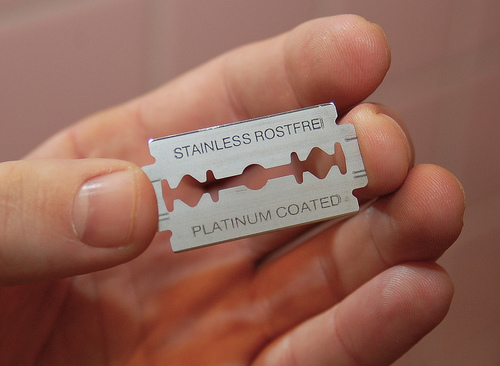
There is nothing like the feel of a freshly shaven face, unless that face just happens to be covered in rashes, infections, nicks and scrapes caused by poor shaving practices. Fortunately, it is easy to break the bad habits that result in skin irritations. Avoid these common shaving mistakes for a smoother, more comfortable shave and better results. More after the jump. » Read the rest of this entry «
Common Shaving Mistakes to Avoid, Part 1
July 31st, 2012 § 0
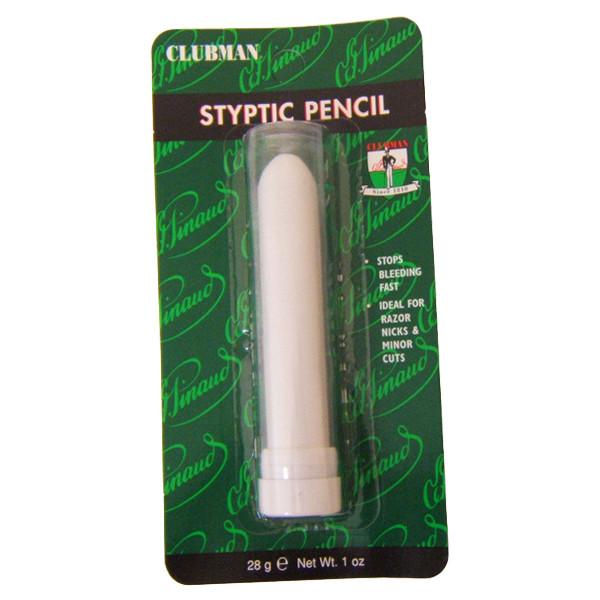
Does the Clubman Styptic Pencil Really Work?
July 23rd, 2012 § 0

Clubman Styptic Pencil, in its new advertising campaign masterfully art-directed by Toronto’s Steven Savicky.
The Clubman Styptic Pencil is one gentlemen’s shaving product that performs exactly as described. This small white stick in the distinctive green package contains alum, which is an astringent. This ingredient safely and effectively stops the bleeding associated with the nicks and cuts sometimes caused by shaving. The pencil is stored dry. The user moistens the tip slightly before pressing it against the skin at the site of the cut. It only takes one small application to constrict blood vessels at the site of the bleeding. The pencil leaves behind a light layer of white residue that seals the cut and protects it from becoming infected. Pinaud, the company behind the Clubman name, has a history that dates back to 1810 when it was created by a Parisian named Edouard Pinaud. » Read the rest of this entry «
Vacchetta leather care: well worth the effort
July 19th, 2012 § 0
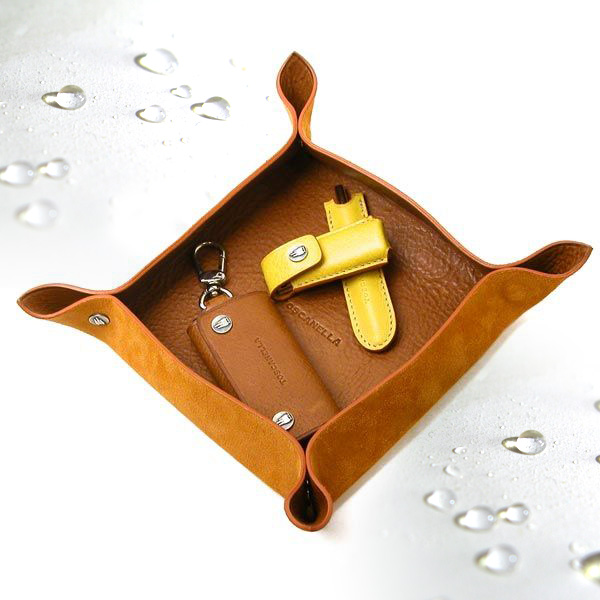
Vacchetta leather is one of the most exquisite and desirable leathers available. Its rich, honey-gold color and soft, buttery texture speak of elegance and style.
Vacchetta leather is chosen from the finest part of the cowhide. It is tanned using vegetable dyes, which lend it the smooth texture that is its signature. The lovely golden color deepens over time by absorbing sunlight, so the more it is used, the more beautiful it becomes.
Normally in the finishing stage of leather treatment, the leather is rubbed with moisturizers and sealed with a coating that protects it from water damage, chemicals, cleaning supplies or scratches. Unfortunately, Vacchetta leather is not treated in this way, so the cost of its beautiful, glowing, golden color and its soft, supple texture is that it is much more susceptible to damage than other leathers.
Thus, because of its lack of protection, caring for Vacchetta leather accessories takes more time and effort than more inexpensive leathers. Below are several tips to keep your Vacchetta leather product looking its best.
What Artificial Hones Are Available Today?
July 13th, 2012 § 0
DMT Dia-Sharp Diamond Sharpeners and Bench Stones
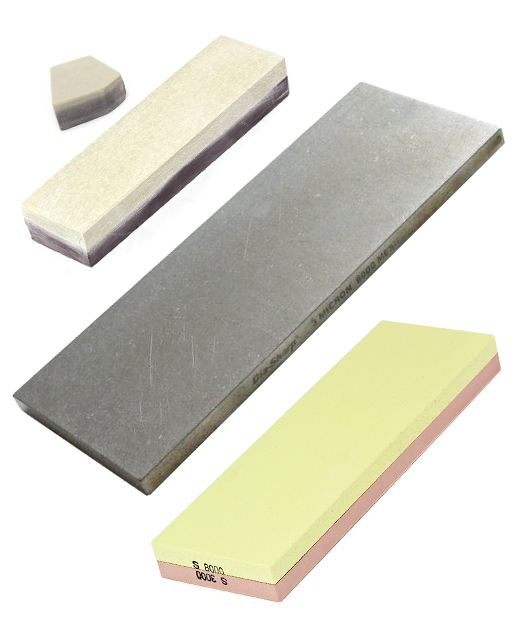
DMT stands for Diamond Machining Technology. DMT Dia-Sharp Diamond Sharpeners are ideal for straight razor users because they require no maintenance. Users do not soak, oil or lap these precision-made diamond plate hones. The surface of these hones remains consistent throughout years of use thanks to sturdy construction and materials. There are several different types of hones by DMT. The DMT Dia-Sharp Bench Stone is available as a coarse hone that comes in two sizes. This coarse hone can be used as a lapping plate for natural hones such as the Belgian Yellow Coticule, Belgian Blue Coticule, German Escher Stones and natural Japanese Waterstones. This coarse hone is recommended only for lapping; it is not suitable for sharpening. The DMT Dia-Sharp Bench Stone is also available in extra fine and extra extra fine grits. Unlike the coarse diamond plate hones, these two finer grits are used to sharpen straight razors. The extra fine grit is perfect for the first phase of honing. It removes light corrosion, dents and small chips from the blade. The extra extra fine grit is used for the final phase. This hone completes the process of polishing and maintaining a straight razor.
What Makes Artificial Hones Different?
July 11th, 2012 § 0
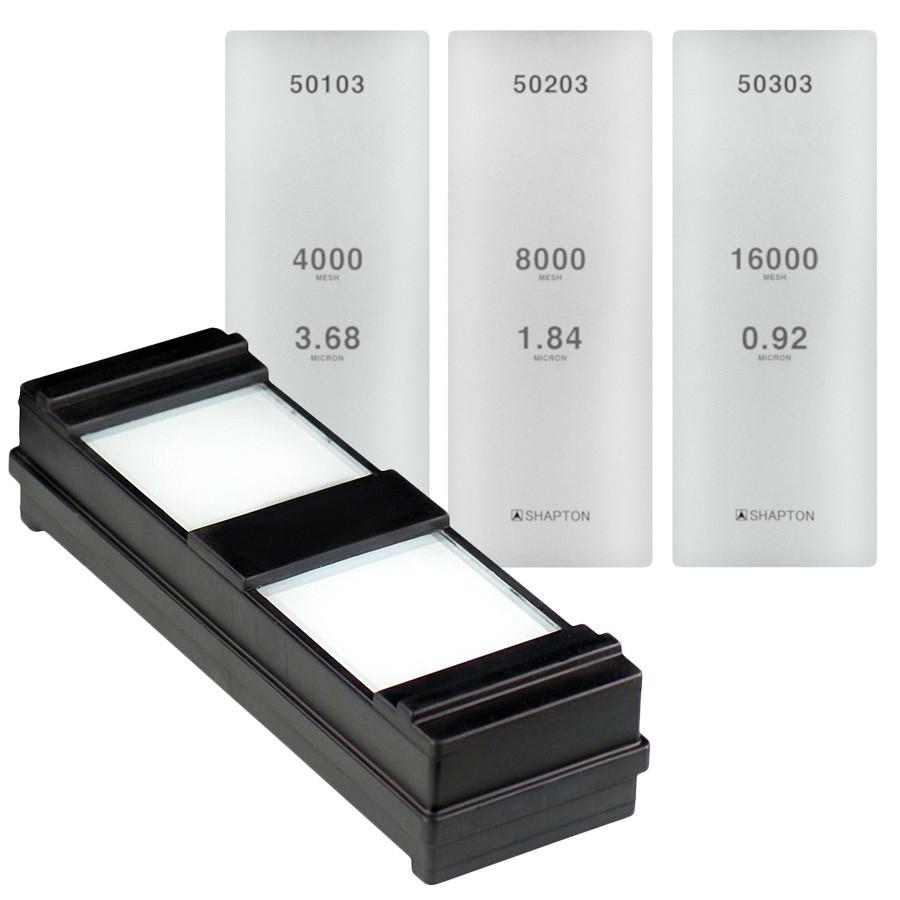
When it comes to sharpening a straight razor, men can choose between natural hones and artificial hones. Artificial hones pose a greater variety of choices and greater availability. Unlike natural hones, which are mined from quarries, artificial hones are manufactured so their availability is virtually unlimited. When demand exceeds supply, manufacturers can simply produce more. Of course, supply is not the only way in which artificial hones have the edge on their natural counterparts. Artificial hones are more consistent when it comes to grit. That’s because they can be made to exact specifications. There are several different types of artificial hones, each with its own unique characteristics. Diamond plate hones are metal plates that are covered with a thin layer of real diamonds. Glass hones combine a polished, tempered glass base with a layer of ceramic matrix. Synthetic Japanese Waterstones have a reputation as the best artificial hones available. With the resurgence in popularity of shaving with straight razors, it’s no surprise that people are talking about artificial hones. Users agree that they are easier to use and maintain than natural stones, and they provide a sharper, precision edge.
Know Your Hones: Natural or Artificial?
July 10th, 2012 § 0
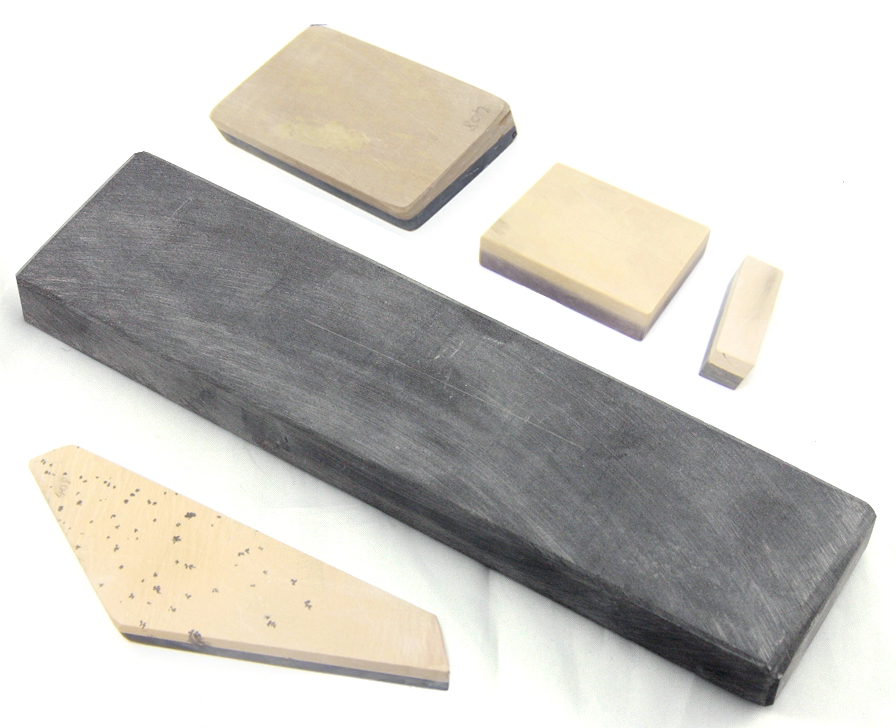
There are two basic types of hones, natural hones and artificial hones, however, they both serve the same purpose, to sharpen straight razors in between uses. In addition, there are many different variations within the two main categories of hones. Hones are also commonly known as sharpening stones.
Some common natural hones are Belgian Yellow Coticule or Belgian Blue Coticule. The names of these hones accurately reflect what they are, both in origin and in substance. These stones are mined from Belgium and they come in both yellow and blue varieties. The name coticule comes from the Latin word coticula, which means whetstone. These natural hones, or coticules, come in several different sizes. The physical beauty of these natural hones is that no two look exactly the same due to naturally occurring variations in their appearance.
Montecristi Panama Straw Hats, Part II: A Very Incomplete Guide on How to Select Them and Where to Buy Them
July 4th, 2012 § 3
So, I’ve piqued your interest, and you are thinking, “This Montecristi thing—how do I go about finding a good Panama Hat?” You want that film noir look with the classic fedora. Or maybe you are tired of your sunburned ears and neck and are remembering when golfers and boaters wore hats, not visors or caps. A Monte Carlo or a skimmer might be just the thing. Use your head the way it was intended. Look like a grown up. A sophisticated grown up.
But you don’t necessarily want to throw the complete contents of your candy jar into the search. Must have a little left for a maybe a cigar and a mojito, and that overhead fan.
Or maybe you are in for the best of the best, but how do you know you’ve found it? » Read the rest of this entry «
Montecristi Panama Straw Hats, Part I: Fall in Love
July 3rd, 2012 § 0
I love summer. If you had been through several Canadian winters, you would love it as well. Love it so much you might start to think that global warming is not so bad after all.
Each and every summer I’m like a kid left unsupervised with a jar of candies. In my case the candy jar is filled to the brim with the unrestricted access to credit cards.
I am dedicating the contents of that candy jar this summer to Panama Straw Hats. A friend with a gift of finding ridiculously expensive, and somewhat impractical, accessories for men, pointed me in the right direction: Montecristi Panama Straw Hats.
It was love at first sight. Sensing a trend here?